

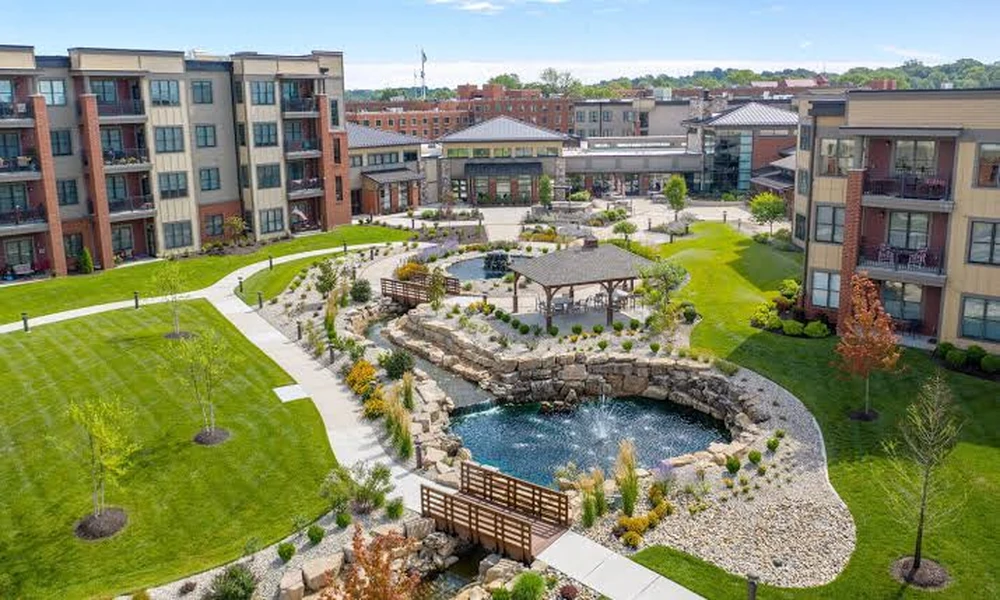
Fewer than 16,500 senior housing units were under construction in the most recent quarter tracked by the National Investment Center for Seniors Housing and Care. That is the thinnest pipeline since 2012. Meanwhile, occupancy keeps climbing. The buildings simply are not getting built fast enough, and the developers who are moving forward are making a radically different choice about how they build than the generation before them did.
That choice is project delivery method. And for senior living development right now, it matters more than almost any other decision you make before breaking ground.
A Supply Crisis That Is Not Going Away
The numbers behind the senior living shortage are not subtle. Over the next ten years, the U.S. population aged 85 and older is projected to nearly double from 6.5 million to 11.8 million, and approximately 10,000 baby boomers turn 65 every single day, with all 73 million boomers hitting that milestone by 2030. The oldest boomers turned 80 in 2026. That cohort, the one with the highest care needs and the greatest likelihood of entering a senior living community, is now arriving at the door.
Construction has not kept pace. Demand for senior housing has climbed to record levels, but year-over-year inventory growth in 2025 was just 1 percent, the lowest figure recorded since the National Investment Center for Seniors Housing and Care began tracking this data in 2006. That is a structural problem, not a temporary blip. According to NIC research, maintaining today’s senior housing availability per capita will require an additional 560,000 units beyond what existed in the early 2020s, yet at the current pace of construction, only about 190,000 new units are likely to be delivered by 2030.
That gap is not something you can solve by just deciding to build more. You also have to build faster, and smarter about cost certainty, than the traditional process allows.
Why the Traditional Design-Bid-Build Model Stalls Senior Living Projects
Most institutional construction has historically followed a sequential path: hire an architect, receive a complete set of drawings, then send those drawings out to general contractors for competitive bids. It feels rigorous. It also burns months before a single shovel enters the ground, and the owner carries nearly all the risk when bids come back over budget.
For a senior living project, that sequence is particularly punishing. Senior living facilities carry complex program requirements: memory care wings, dietary service infrastructure, accessibility compliance across every square foot, outdoor environments designed for cognitive and physical therapy, and staff support spaces that non-specialized designers consistently underestimate. When the architect and contractor are separate parties, scope conflicts get discovered late, and late discoveries in construction mean expensive change orders.
There is also a financial pressure specific to this sector. Supply and demand dynamics within the seniors housing sector are at a crossroads, with new supply constrained due to increasing financing and construction costs. Lenders want more predictable cost structures than the traditional model delivers. A bid that changes significantly during construction is the kind of surprise that kills construction loans mid-project.
The Clock-to-Occupancy Framework: How Design-Build Changes the Math
Here is a framework worth keeping: call it Clock-to-Occupancy. Every month a senior living project spends in design limbo or contractor procurement is a month you are not collecting rent, not serving residents, and not relieving pressure on a starved market. The Clock-to-Occupancy calculus says that the delivery method that gets you to a revenue-generating, fully occupied building fastest wins, all else being roughly equal.
Design-build collapses the sequential process. The architect and builder work as a single team from day one, which means construction documents and site work can overlap instead of waiting in line. Cost feedback happens in real time, not at bid opening. The 2024 FMI study commissioned by the Design-Build Institute of America reaffirmed design-build’s steady rise, forecasting a 2.9% compound annual growth rate through 2028, with public and private owners increasingly adopting it to overcome hurdles like tight schedules, cost uncertainty, and supply chain disruptions.
Choosing a design build contractor who specializes in senior living removes one more layer of friction: the learning curve. Senior living is not a generic building type. Circulation layouts, egress planning, life safety systems, and the relationship between indoor and outdoor space all carry regulatory and operational requirements that differ from multifamily or commercial work. A team that has designed and built dozens of these communities carries that institutional knowledge into the budget and schedule from the first conversation, not the first change order.
What Owners Are Actually Asking Before They Commit
Developers and nonprofit operators who are actively moving forward with senior living projects in this environment tend to ask four questions before settling on a delivery approach. Work through them honestly and the right method usually surfaces on its own.
- How much cost certainty do you need at financing? If your lender requires a guaranteed maximum price before issuing a construction loan, design-build’s integrated structure makes that commitment achievable earlier and more defensibly than a competitive bid.
- What is the penalty for each month of delay? In a market where occupancy rates are near historic highs, every month of delay is real revenue left on the table. Estimate it. If the number is material, schedule compression becomes a hard business requirement, not a preference.
- Does your team have senior living-specific experience? General experience is fine for a warehouse. Senior living facilities require fluency in ADA compliance, fire and life safety codes for high-acuity settings, and operational workflows that affect how space is designed. Verify the project history, not just the firm’s total square footage.
- Who holds the risk when scope changes? In design-bid-build, the owner often absorbs the friction between designer intent and contractor execution. In a well-structured design-build contract, that friction is internal to the delivery team. Ask each candidate directly how scope conflicts between design and construction get resolved, and who absorbs the cost when they arise late.
A Concrete Scenario: The 80-Bed Memory Care Dilemma
Picture an 80-bed memory care facility in a mid-size Midwest market. The operator already has a site, a letter of intent from a lender, and a demographic study showing demand. The question is whether to hire an architecture firm first, or bring in an integrated team.
Under the traditional sequence, schematic design alone takes four to six months. Then design development. Then construction documents. Then bidding. A conservative timeline to groundbreaking from that starting point is twelve to eighteen months. The lender’s rate lock may not survive that timeline.
Under a design-build approach with a qualified, specialty-experienced team, schematic design and preliminary pricing run concurrently. Early site work can begin during document development. The same project could break ground in six to nine months. In a market where senior living communities are filling faster than they can be built , that six-to-nine-month difference is not just an efficiency number. It is an occupancy advantage that compounds from the day you open your doors.
“When executed in accordance with proven best practices and techniques, design-build can continue to drive optimal outcomes for Owners and practitioners nationwide.”
– Lisa Washington, CAE, Executive Director/CEO, Design-Build Institute of America, as quoted in the DBIA’s 2024 FMI report summary
Choosing Your Path Before the Market Chooses for You
The senior living supply shortage is one of those rare situations where the business case, the demographic reality, and the human need all point in the same direction: build more, and build faster. Project delivery method is one of the most direct levers you control before a project begins.
The operators and developers gaining ground right now are not waiting for financing conditions to normalize or for construction costs to drop. They are compressing timelines wherever possible, reducing risk transfer friction wherever possible, and choosing teams with deep sector experience. That combination is hard to manufacture after the fact. The time to make that delivery decision is at the beginning, before the architect’s first sketch and before the first lender call.
What would your project timeline look like if your designer and builder were in the same room from day one?
