

Key Takeaways
- Evaluate a Paradise Valley or Scottsdale home based on its full ownership costs, not just its purchase price.
- Review HVAC condition, insulation, windows, solar agreements, and energy efficiency to understand cooling costs.
- Inspect roofs, drainage, exterior finishes, and other features affected by desert heat and monsoon weather.
- Consider whether patios, pools, landscaping, shade, and outdoor spaces are practical and easy to maintain.
- Prioritize functional layouts, flexible rooms, storage, and features that support everyday living.
- Visit the property at different times to assess traffic, noise, sunlight, privacy, and neighborhood convenience.
- Focus on durable features and useful smart technology rather than short-lived design trends.
- Keep renovation and maintenance records in mind, and assess whether the home’s features will appeal to future buyers.
In Paradise Valley and nearby Scottsdale, a home’s value is about far more than its asking price or the number beside “square feet.” A property can look impressive at a showing yet prove expensive, uncomfortable, or impractical once summer utility bills, maintenance schedules, and everyday routines begin. The best purchase is one that works well long after closing.
Local context matters because homes can vary dramatically by lot orientation, shade, road exposure, construction quality, and neighborhood setting. Paradise Valley AZ real estate agent Mary Chen offers home search, valuation, and neighborhood guidance for buyers and sellers in Paradise Valley, Scottsdale, North Scottsdale, Arcadia, and Phoenix. Mary Chen’s experience across residential, land development, and commercial real estate makes her website a useful local resource for comparing property condition, lifestyle fit, and long-term appeal.
Start With the Full Cost of Ownership
A lower purchase price does not automatically mean a lower-cost home. Before making an offer, consider the expenses that will continue after closing: electricity, pool service, landscaping, insurance, property taxes, HOA dues, and routine roof and HVAC care. An older home with aging systems may require more attention than a newer or recently updated alternative.
Ask for recent utility bills, service records, transferable warranties, seller disclosures, and HOA documents. These materials do not predict every future expense, but they can help buyers identify questions worth raising during inspections and negotiations.
Look Closely at Cooling and Energy Efficiency
In Arizona, air conditioning affects both comfort and household budgeting. Check the age, maintenance history, and condition of the HVAC equipment, then look at insulation, window quality, exterior shade, programmable thermostats, appliances, and any solar installation. A listing description is a starting point, not proof that a system performs well.
If solar panels are present, confirm whether they are owned, financed, or leased, and review the agreement carefully. Efficiency upgrades should be judged by their condition, expected maintenance, and documented performance rather than marketing language alone.
Measure How Well the Home Handles Desert Living
Heat, intense sunlight, dust, and monsoon storms place real demands on Arizona homes. During a showing and inspection, pay close attention to roof condition, drainage, window seals, exterior paint, garage ventilation, grading around the foundation, and signs of prior water intrusion.
Consider two similarly priced homes. One may have a shaded patio, maintained roof, intact seals, and durable finishes. The other may have sun-faded exterior surfaces, limited drainage, and exposed west-facing windows. Their list prices may be close, but their comfort and upkeep needs can be very different.
Treat Outdoor Space as Part of the Home
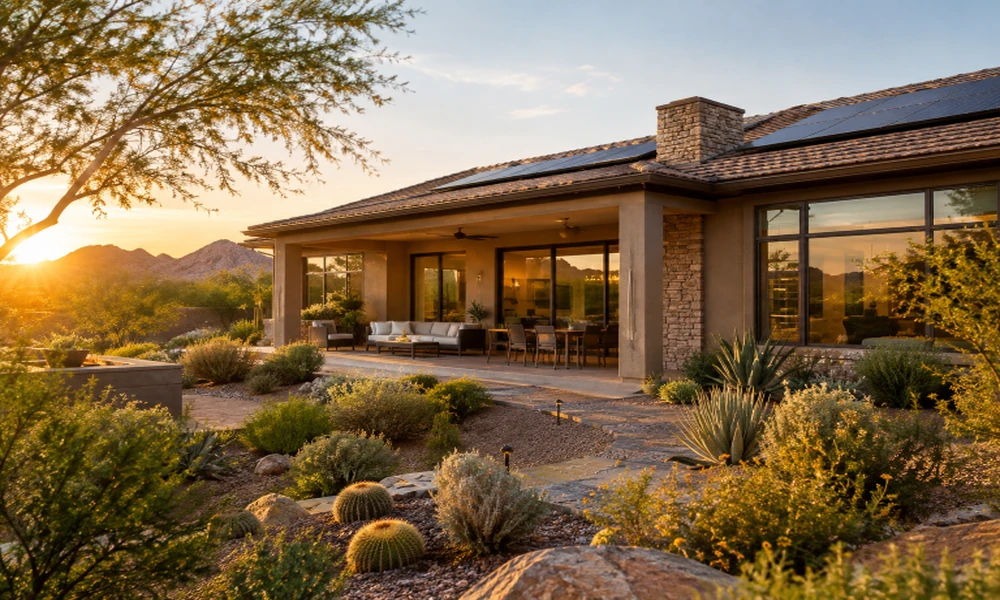
Outdoor areas are especially important in Paradise Valley, where patios, pools, mountain views, and desert landscaping can shape daily life. Look beyond the visual impact of a yard. Evaluate whether the space has usable shade, privacy, functional seating areas, healthy irrigation, and a layout that matches how you actually spend time.
If there is a pool, ask about its age, equipment, surface, safety features, and service history. Mature trees may provide valuable shade, but they also need ongoing care. Low-water landscaping can simplify maintenance, while poorly designed landscaping can add work without improving how the property is lived in.
Prioritize Flexible Rooms and Practical Layouts
Usable space often matters more than total space. A home with a well-located office, guest suite, storage, hobby room, exercise area, or quiet reading nook may serve a household better than a larger floor plan with oversized passages or rarely used formal rooms.
Look for a balance between open gathering areas and private rooms. Think about where people will work, rest, host visitors, store seasonal items, and adapt if needs change. A practical layout can make a home feel valuable every day.
Consider Location at a Daily-Life Level
Neighborhood names matter, but the immediate setting often matters more. Review the actual street, traffic patterns, nearby homes, noise, parking, views, privacy, access to shops and restaurants, schools, parks, and likely commute routes. Future development or zoning activity may also affect a property’s surroundings.
Visit at different times of day when possible. Morning sun, afternoon heat, school traffic, and evening noise can reveal factors that a single showing may not capture.
Separate Timeless Features From Short-Lived Trends
Quality windows, natural light, durable flooring, useful storage, efficient climate control, thoughtful kitchens, and well-planned bathrooms tend to support daily function. Trend-heavy finishes can be attractive, but they cannot correct a poor layout, weak maintenance history, or challenging location.
Many 2026 home design trends emphasize flexible spaces, indoor-outdoor connection, and technology that supports convenience. Those ideas are most valuable when they improve how a household uses the home rather than merely adding visual novelty.
Review Smart Features for Real Use
Smart thermostats, video doorbells, smart locks, leak sensors, whole-home Wi-Fi, and automated shades can be useful when they are reliable and easy to manage. Ask whether devices are included, transferable, compatible with common platforms, and still supported by their manufacturers.
Arizona listing information collected in Arizona home feature data includes smart-home features among attributes associated with strong sale-to-list performance. That relationship does not guarantee added value for every property, so buyers should still focus on whether the technology solves a real need.
Check the Home’s Resale Story
Even if you expect to stay for years, consider the next buyer. Convenient location, reasonable maintenance requirements, functional bedroom and bathroom counts, good parking, natural light, flexible rooms, and usable outdoor space can broaden future appeal. Avoid highly personalized changes that could limit the buyer pool.
Keep records for renovations, permits, HVAC replacements, roof work, pool equipment, and solar systems. Clear documentation can make future buyers more confident about a property’s care.
A Simple Home-Value Scorecard
During each showing, rate these categories from one to five, then compare the totals before becoming emotionally attached:
- Comfort: Can the home stay cool and pleasant in hot weather?
- Condition: Are major systems maintained?
- Cost: Are likely ongoing expenses manageable?
- Location: Does the setting support daily routines?
- Function: Does the layout fit current and future needs?
- Outdoor Living: Is the exterior genuinely usable?
- Resale: Would another buyer recognize the same strengths?
Questions to Ask Before Making an Offer
- How old are the roof, HVAC system, water heater, and pool equipment?
- What have summer utility bills looked like?
- Are there pending HOA assessments, restrictions, or rule changes?
- Which improvements were completed, and were permits required?
- Are solar panels owned, financed, or leased?
- Has the property experienced any drainage, roofing, plumbing, or foundation issues?
- What nearby construction or zoning changes could affect the area?
- Which installed features depend on service contracts or subscriptions?
Value Should Feel Good After Closing
Choosing a home in Paradise Valley or Scottsdale means looking beyond luxury finishes, impressive views, and square footage to understand how the property will perform over time. Review cooling efficiency, major systems, outdoor maintenance, insurance, HOA costs, and the condition of features exposed to Arizona’s heat and monsoon weather. Consider how the layout, location, and usable outdoor spaces support your daily routine, while keeping future resale appeal in mind. With careful property comparisons and local guidance from Mary Chen, you can make a more informed purchase that balances comfort, practicality, and long-term value.
