

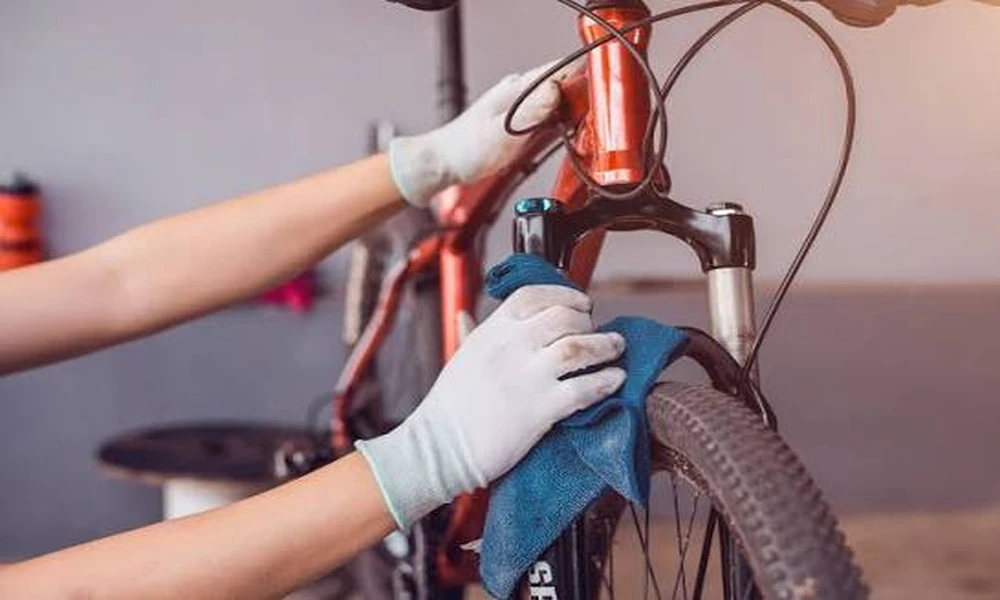
Every 150 to 200 miles on dry roads. Roughly every 50 to 80 miles in rain, on gravel, or through winter salt. That’s the short answer, and if you’ve been running a chain for a full season without touching it, you’re already spending money you don’t need to spend.
I’ve watched a lot of drivetrains come through a workstand, and there’s a pattern worth naming: the riders who replace cassettes every spring are almost always the riders who never degrease anything. Grit doesn’t destroy a chain all at once. It works like sandpaper in slow motion, eating steel a few microns at a time, and by the time the chain starts skipping on your favorite climb, the damage has already jumped to your chainrings.
Here’s the good news. Cleaning a chain takes about five minutes once you’ve got the routine down, and a proper bike chain degreaser does most of the work for you. The rest of this piece is about getting the frequency right so you’re cleaning enough, but not more than you need to.
Why chain cleaning frequency matters more than chain cleaning effort
Most riders clean their drivetrain when it looks dirty. That’s the wrong trigger, because a chain that looks clean can still be carrying an invisible grinding paste of road dust and old lubricant. The real question isn’t appearance. It’s how many miles of grit have bonded to the chain’s inner surfaces, where you can’t see it and where the pins and rollers do all their work.
Lubricant picks up particles and holds them. As the chain flexes through the derailleur cage and around the cassette, those particles get pressed into the gaps between pin and roller, and that’s where wear starts. The visible outer plates are almost an afterthought.
So the frequency question has a better answer than “when it’s dirty.” Track your miles, track your conditions, and clean on a schedule that matches both.
The Drivetrain Budget: a simple frequency schedule
I’ve started recommending a two-variable rule to the riders I talk to, and I call it the Drivetrain Budget. You have two currencies: miles and conditions. Spend more miles and you owe a cleaning. Spend time in bad conditions and you owe one sooner. Here’s how it shakes out.
| Riding conditions | Cleaning interval | What triggers an early clean |
|---|---|---|
| Dry pavement, fair weather | Roughly every 150 to 200 miles | Chain feels dry or squeaks on the stand |
| Mixed road and rail trail | Roughly every 100 to 150 miles | Visible dust on the outer plates |
| Gravel or dirt | Roughly every 50 to 80 miles | Grit you can feel when you run a cloth along the chain |
| Rain, winter salt, or mud | After every wet or salted ride | Any wet ride, no exceptions |
Salt deserves its own line because it’s the worst offender in the whole table. If you ride through a treated road in January, rinse and clean the same day, even if the ride was twenty minutes. I’d rather see a rider clean three times a week in winter than once a month with a chain that’s quietly rusting from the inside.
What actually happens when you skip it
Wear compounds. A stretched chain doesn’t just skip. It wears the teeth of your cassette and chainrings to match its new pitch, which means a cheap part failure turns into a much more expensive one. The late Sheldon Brown’s maintenance archive has been the reference point for this argument for decades, and the logic still holds: chains are consumables, cassettes should not be.
There’s a performance angle too, and it’s the one I care about more. A clean, properly lubricated chain quietly saves you watts. Not a lot, but enough to feel on a long climb. A gritty chain feels like riding with the brakes half on, and you’ll notice it before your legs tell you why.
Does a chain cleaner tool work as well as taking the chain off?
For most riders, yes. A clamp-on chain cleaner with a reservoir of degreaser is fast, contained, and good enough for weekly maintenance. Pop the chain off with a quick link and soak it if you want the deeper clean, and do that a few times a season rather than every week.
Whichever route you take, finish with a rinse and then let the chain dry completely before you re-lube. Solvent left in the rollers dilutes fresh lubricant and makes the next ride noisier than the last one. I’ve made that mistake enough times to be boring about it.
A five-minute cleaning routine you can actually keep
- Set up. Bike in a stand or flipped, rag under the drivetrain, and a soft brush within reach.
- Degrease. Apply the degreaser to the chain while turning the cranks backward, then let it sit for a minute so it can lift the old lubricant instead of just wetting it.
- Agitate. Run a chain cleaner tool or work the chain through a brush. This is the step people skip, and it’s the one that matters.
- Rinse. Warm water, no high pressure. Never point a hose at the bottom bracket or hub seals.
- Dry and lube. Rag the chain dry, give it a few minutes in the sun, then apply lubricant one drop per roller and wipe the excess.
That’s it. No specialty tools beyond a brush and a rag, and no reason to put it off until the weekend.
Chain cleaning mistakes that cost you money
Three things burn through drivetrains faster than skipping a clean entirely.
- Over-lubing. A wet, tacky chain collects grit. One drop per roller, then wipe. Excess lubricant on the outside does nothing but attract dirt.
- High-pressure washing. Blasting water past the seals pushes grit into bearings you can’t easily service. The Environmental Protection Agency also notes that runoff from washing activities can carry pollutants into storm drains, so keep the rinse modest and catch what you can.
- Cleaning without re-lubing. A degreased chain with no lubricant is a rust magnet. If you’re out of lube, don’t degrease.
Checking chain wear is the other half of the job
Cleaning keeps a chain alive. Measuring it tells you when to let go. A chain checker is cheap, and the Park Tool reference material on drivetrain wear is a solid place to learn what the numbers mean. Check every few hundred miles and replace before the wear indicator says it’s urgent. Catching it early is what keeps your cassette in service for years instead of seasons.
Here’s the order I’d suggest if you’re starting from zero: buy a chain checker and a decent degreaser this week. Set a mileage reminder on your phone. Clean on schedule for a month, and then decide whether the five minutes was worth it. My bet is you’ll wonder why you waited.
Frequently asked questions
Can I clean a chain with dish soap?
It’ll cut light surface grime but won’t break down old chain lubricant the way a dedicated degreaser does. Save the dish soap for the frame and use the right product on the chain.
How often should I fully remove and soak the chain?
A few times a season is plenty, or any time you’ve ridden through salt and mud. Between those, the clamp-on tool routine is enough.
Does a clean chain really last longer?
Yes, and the mechanism is straightforward: less grit means less metal removed per pedal stroke. The chain wears at the same rate as the surfaces it grinds against.
Now here’s the question worth asking yourself: when did you last actually clean your chain, and what did you find when you did? If the answer involves a rag that came back gray in seconds, your next clean is overdue.
